Korean Budget Airlines Slash 900 Flights as Fuel Prices Bite Hard
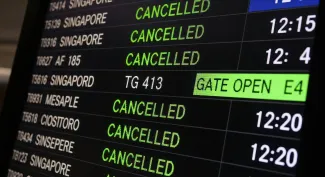
SEOUL, South Korea - Korea's budget carriers are pulling the emergency brake on international expansion, and summer travelers are about to feel it. Nearly 900 round-trip international flights have been chopped from schedules through June as surging jet fuel prices, driven by the ongoing Middle East conflict, force low-cost carriers to make painful cuts. And it's not just flights; cabin crews are being furloughed as airlines scramble to stay afloat. If you've got plans to fly from Seoul to Bangkok, Phu Quoc, or Guam on a budget carrier this spring, you might want to double-check your booking. Multiple Korean low-cost airlines have already started notifying passengers of cancellations, and industry insiders warn more could be coming as carriers finalize June schedules.The Damage By Airline
The cuts aren't evenly distributed. Jeju Air, Korea's largest budget carrier, leads the pack with 187 round-trip international flights canceled in May and June alone, according to Korea JoongAng Daily. That's about 4 percent of the airline's entire international operation. Routes from Incheon to Phu Quoc and Da Nang are taking the brunt of the reductions. Jin Air isn't far behind, pulling 176 round-trip flights with a particular focus on routes to Guam and Phu Quoc. Air Busan has axed 212 round-trip flights across Da Nang, Bangkok, and Cebu in the Philippines. The numbers keep piling up. T'way Air, Air Premia, Eastar Jet, and Aero K have all joined the cutback parade, each trimming dozens to hundreds of flights across Southeast Asia, North America, and regional routes. When you add it all up, we're looking at close to 900 international round trips vanishing from Korean LCC schedules, with more likely on the way as airlines assess June capacity.Crew Members Feel The Squeeze
It's not just empty seats that tell this story. Multiple carriers including T'way Air, Jeju Air, and Aero K have begun implementing unpaid leave for cabin crew starting in May. That's the human cost of this fuel crisis; flight attendants who were counting on summer's busiest season are instead facing furloughs and uncertain paycheques. For airlines operating on razor-thin margins, the math is brutal. When fuel costs spike, there's nowhere to hide. Budget carriers don't typically have the sophisticated hedging programs that legacy airlines use to smooth out price shocks, and most don't have the balance sheets to absorb prolonged hits from oil market chaos.What's Driving The Crisis
The culprit is straightforward: jet fuel prices in Asia have climbed sharply as the Middle East conflict disrupts oil supply chains and market confidence. While the Korea JoongAng Daily reported that airlines are being squeezed by surging fuel costs tied to ongoing tensions in the region, the cascading effects are showing up in weekly price spikes across Asian markets. For context, jet fuel prices in Asia and Oceania rose 16.6 percent to $204.95 per barrel in the week of March 13 to 20, and those increases have continued into spring. When your primary cost input doubles in a matter of months and you're operating on margins measured in single digits, something has to give. In this case, it's international routes and staffing levels.Fuel Surcharges Climbing Too
Passengers who do manage to keep their bookings intact are facing sticker shock of their own. T'way Air raised its fuel surcharge for Thailand-bound passengers from 1,900 baht to 2,850 baht, a jump of nearly 50 percent. Across the board, fuel surcharges on Southeast Asia routes have climbed to 200,000 Korean won (roughly $135) one way on some carriers. That's a hefty add-on for travelers who booked budget fares expecting to save money.The Booking Calculus Just Changed
Here's the reality for travelers: Korean budget airlines are in survival mode, and your summer plans might be collateral damage. If you're holding a reservation on Jeju Air, Jin Air, Air Busan, T'way, or any Korean LCC through June, don't assume it's locked in. Check your email religiously, monitor booking confirmations, and have a Plan B ready. The route cuts tell you where the pain is sharpest. Southeast Asia destinations like Bangkok, Phu Quoc, Da Nang, and Cebu are getting hammered because those routes depend on high load factors and competitive pricing; when fuel costs spike, the margins evaporate. Long-haul routes like Air Premia's U.S. services to Los Angeles, Honolulu, San Francisco, and New York are also vulnerable; flying fuel-guzzling widebodies across the Pacific gets expensive fast when oil prices soar. If you're booking new travel, consider legacy carriers or routes with multiple daily frequencies. Yes, you'll pay more upfront, but the risk of last-minute cancellations drops significantly. And if you're already booked on an LCC, grab travel insurance that covers carrier-initiated cancellations if you haven't already. The crew furloughs are a warning signal too. When airlines start sending staff home on unpaid leave, it signals they expect the pain to continue for weeks or months, not days. That means more capacity cuts could be coming, especially if the Middle East situation doesn't stabilize or if fuel prices climb further. This isn't just a Korean problem; it's a preview of what happens across Asia if oil markets stay volatile. Budget carriers everywhere operate on similar models with similar vulnerabilities. If fuel stays at these levels or climbs higher, expect more LCCs across the region to follow Korea's lead with route cuts and staff furloughs. For travelers, that means fewer options, higher fares, and more uncertainty heading into what should be the peak summer travel season.More travel news
US Warns Citizens to Reconsider Travel to 14 Mideast Nations
Washington, D.C. - The U.S. State Department has reissued security alerts for 14 Middle Eastern countries, warning Americans of rapidly shifting threats and urging caution across the region.

Iran War Chills Japan Tourism as Europe Cancels
TOKYO, Japan - Japan's tourism industry faces mounting European cancellations and economic losses as the U.S.-Israeli war with Iran drives up travel costs and creates uncertainty for long-haul bookings.

Global Airlines Enter Crisis Mode as Jet Fuel Soars
LONDON, England - Airlines across three continents face severe jet fuel shortages with European prices doubling in weeks, forcing carriers into emergency protocols and raising questions about flight cancellations.

Mideast Conflict Threatens Airlines With Soaring Fuel Costs
Global — Aviation intelligence firm alerts industry that the monthlong Mideast war could drive sustained fuel costs and operational risks even after the conflict ends.

About the Author

Bob Vidra
Bob Vidra, based in scenic Tahoe, is an esteemed tech editor known for his deep understanding of the dynamic intersection of technology, travel, and the outdoors.