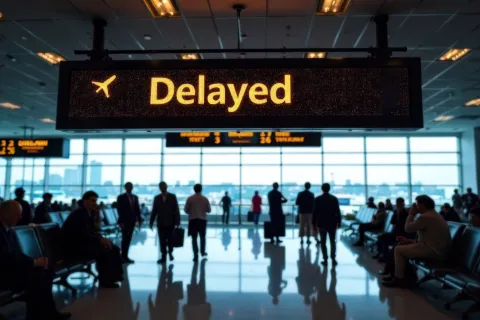
NEW ORLEANS — Here's a question for you: Should airlines tell you the real price before you're halfway through booking a ticket? Seems pretty straightforward, right? Well, the 5th U.S. Circuit Court of Appeals just decided it's not that simple. The court vacated a Biden-era Department of Transportation rule that would've required airlines to show passengers the full fare upfront; that includes baggage fees, carry-on charges, and the cost to change your flight. Airlines won this one, and if you've ever been surprised by a sudden extra $70 at checkout for a checked bag, you're probably not thrilled about it.
What the Rule Was Trying to Fix
The DOT's transparency regulation, issued in April 2024, was all about ending what regulators called "junk fees." The idea was pretty consumer-friendly: make airlines and ticket agents display the total cost right from the start, so travelers could compare prices without having to dig through multiple screens and fine print. According to the DOT, these hidden costs make travelers overpay by more than $500 million every year. That's not pocket change. It's the kind of money that adds up when you're shown a fare of, say, $199, only to discover at the payment screen that your actual cost is closer to $280 once you've added a checked bag, selected a seat, and maybe changed your departure date. Airlines typically do reveal these fees; they just wait until you're deep into the booking process, sometimes right before you click that final "purchase" button. By then, you've invested time, maybe compared a few options, and the psychological momentum to just finish the transaction is strong. It's a tactic that works.
Why Airlines Fought Back
The airlines weren't about to accept this new rule without a fight. American, Delta, United, JetBlue, Alaska Airlines, and the trade group Airlines for America all sued, arguing the DOT violated the Administrative Procedure Act by rushing the rule through without proper notice and comment procedures. The Fifth Circuit agreed. In its February 3, 2026 decision, the en banc court (that's a panel of 17 judges, not just the usual three) ruled that the DOT failed to follow the required legal process. "We conclude that DOT failed to comply with this provision. Therefore, we must apply the APA's 'default' remedy — vacatur," the court wrote, according to the opinion. Translation: the rule is gone, and the DOT has to start over if it wants to try again.
A Procedural Loss, Not a Policy Debate
It's worth noting the court didn't weigh in on whether upfront pricing is a good or bad idea for consumers. This wasn't about the merits of transparency. It was about whether the agency followed the rules when making the rule. "This procedural defect compromised the entire regulation," the three-judge panel had noted back in January 2025, when it initially remanded the case for a fresh comment period. The full court went further this month, deciding vacatur was the only proper fix.
What This Means for Travelers
If you were hoping for a world where airline pricing looked more like, well, most other industries, you're going to be waiting a while longer. For now, it's back to the old system: the advertised fare is just the starting point, and you'll need to click through to see what you're actually going to pay. That's frustrating, especially when you're trying to compare airlines. A $200 ticket on one carrier might end up costing the same as a $220 ticket on another once fees are included, but good luck figuring that out without opening multiple tabs and doing mental math. The rule had also included a couple other provisions. Airlines would've had to apply promotions to the full fare, including mandatory fees, so a "50 percent off" sale actually meant 50 percent off the total. They'd also have been required to share certain third-party data with booking platforms. All of that is off the table now.
Could the DOT Try Again?
Maybe. The agency has the option to redesign the rule and reissue it with a proper notice-and-comment process. Whether they will, especially under a new administration or with competing priorities, is anyone's guess. Consumer advocates have been pushing for this kind of transparency for years, and congressional efforts like the Junk Fee Prevention Act have gone nowhere. So while the legal door isn't closed, the political and regulatory appetite is uncertain. In the meantime, travelers are left doing what they've always done: clicking through the booking process with a healthy dose of skepticism, knowing the price you see first probably isn't the price you'll pay. It's not a great system, but for now, it's the one we've got.
More travel news
Lufthansa Blocks First Class Awards for Millions
FRANKFURT, Germany - Lufthansa blocks first-class award redemptions for frequent flyers in three major markets, eliminating a prized benefit for millions of travelers who've been banking miles for premium cabin flights.
Trump Ends 50-Year National Park Vehicle Ban
WASHINGTON - President Trump reversed Executive Orders 11644 and 11989, lifting decades-old off-road vehicle restrictions on federal lands including areas in and around national parks.

Budget Carrier Collapses as Oil Crisis Grounds Fleets
MIAMI, USA - Viral reports of Spirit Airlines shutting down and Magnicharters filing for bankruptcy due to a U.S.–Iran oil crisis do not align with verifiable airline industry timelines or real-world events.

Memorial Day Travel Surges Despite Higher Gas Prices
UNITED STATES - Record 45 million Americans to travel Memorial Day weekend despite gas averaging $4.52, with nearly 87% choosing road trips over air.

About the Author

Bob Vidra
Bob Vidra, based in scenic Tahoe, is an esteemed tech editor known for his deep understanding of the dynamic intersection of technology, travel, and the outdoors.